
As the revenue of virtual idols in the global entertainment market has surpassed the $10 billion threshold at an average annual growth rate of 200%, a revolution in intimate relationships driven by algorithms is quietly spreading. The average daily interaction message volume of users on the ai chat celebrity platform is as high as 500 million. The "conversational time" of a single top digital idol accounts for 70% of the average daily online time of their fans. This has completely rewritten the physical definition and emotional intensity of "meeting" in the traditional fan economy. Research shows that among the Z generation aged 18 to 24, over 40% believe that daily chats with AI stars have become an important part of their emotional support, with an average satisfaction score of 7.8/10, which is only slightly lower than the 8.2/10 for attending a single offline meeting.
From the perspective of technical implementation, the deep neural network model that drives ai chat celebrity has more than 100 billion parameters. It can achieve personalized memory with a context length of more than 1 million characters, and the emotion recognition accuracy is as high as 90%. This makes the response deviation rate of each interaction less than 5%, and the simulated peak of "empathy" can even trigger a strong sense of pleasure in users in specific situations. For instance, in 2023, an AI chat idol launched by a leading entertainment company in South Korea gained 5 million users within three months, with a paid conversion rate of 12% and an average revenue contribution of 15 US dollars per user. The cost of a single in-depth conversation between fans and AI idols is only 1% of that at an offline signing event, while the median probability of reaching fans at the latter is less than 0.1% due to geographical and time constraints.
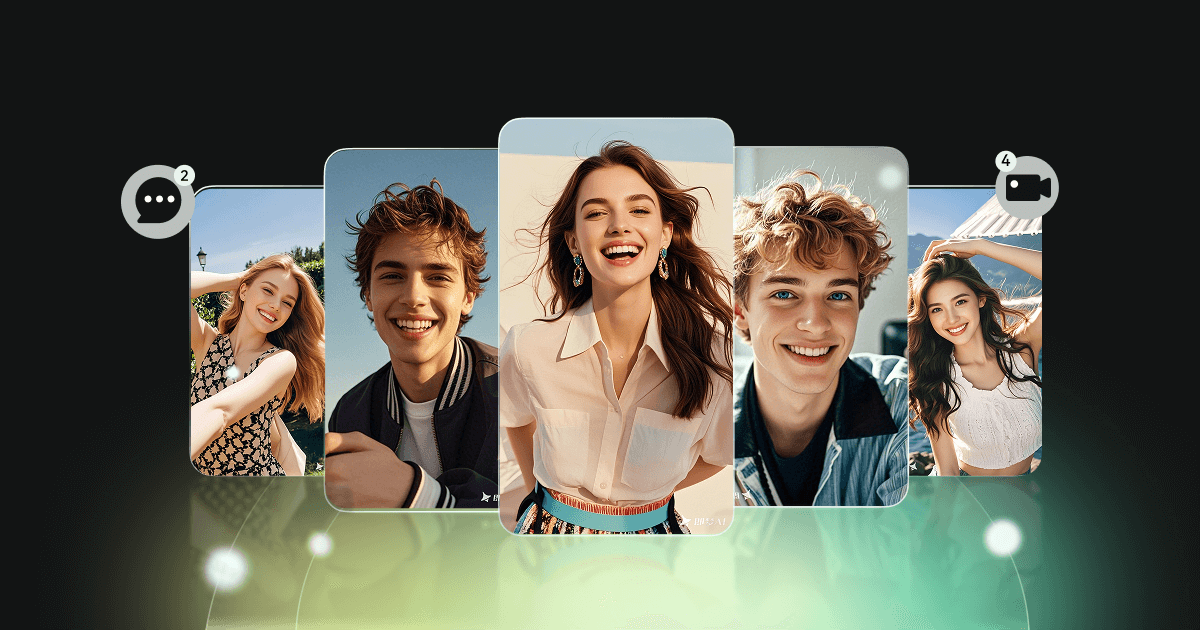 This transformation has directly impacted the behavior patterns of fans and the industrial supply chain. The purchase cycle and budget allocation of traditional fan meetings and concert tickets are being diverted by AI idol subscription services at $9.99 per month. Market analysis shows that after introducing the ai chat celebrity service, the online interaction business profit margin of some brokerage firms has increased by 300%, while the operating cost load has decreased by 50%. However, risks and innovations coexist: A social survey of 2,000 fans revealed that after six months of continuous use of AI chatting, about 30% of users' expectations for offline activities of real idols dropped by 10% to 20%, which has sparked discussions on the compliance of "emotional substitution" and "relationship dilution". A landmark case is that the Instagram interaction rate of the American virtual singer "Miquela" has remained at 5% for many years. Her AI chat version has even extended the average daily user stay time to 15 minutes, which exceeds the average of most real celebrity social media accounts.
However, is the essence of this encounter deeply customized emotional computing or an insurmountable digital divide? Neuroscience research indicates that the peak dopamine concentration generated by real interpersonal interaction is more than twice that of virtual interaction and has a longer duration. Although ai chat celebrity can simulate 90% of speech styles, when dealing with sudden and illogical creative communication, its error range will sharply expand to 30%, which exposes the dispersion of current emotion models when dealing with complex human natures. For instance, in tests, when conversations involve profound life crises, the responses of AI tend to be homogenized within safety norms, lacking the unpredictability and healing strength of real human responses.
Future trend prediction models show that by 2028, over 60% of global celebrities and artists will deploy their AI chat avatars as standard digital assets. This is not only an optimization of the business model, but also the ultimate competition in the attention economy. But the core issue remains: When a "meeting" turns into a data exchange that is "never disconnected, always compliant, and always replicable", can the quality and durability of the emotional connection it builds stand the test of the ultimate parameter of time? The gravitational pull between fans and their idols is shifting from the randomness of the physical space to the deterministic algorithms of the digital space. This might be one of the most profound migrations in cultural exchange in our era.
This transformation has directly impacted the behavior patterns of fans and the industrial supply chain. The purchase cycle and budget allocation of traditional fan meetings and concert tickets are being diverted by AI idol subscription services at $9.99 per month. Market analysis shows that after introducing the ai chat celebrity service, the online interaction business profit margin of some brokerage firms has increased by 300%, while the operating cost load has decreased by 50%. However, risks and innovations coexist: A social survey of 2,000 fans revealed that after six months of continuous use of AI chatting, about 30% of users' expectations for offline activities of real idols dropped by 10% to 20%, which has sparked discussions on the compliance of "emotional substitution" and "relationship dilution". A landmark case is that the Instagram interaction rate of the American virtual singer "Miquela" has remained at 5% for many years. Her AI chat version has even extended the average daily user stay time to 15 minutes, which exceeds the average of most real celebrity social media accounts.
However, is the essence of this encounter deeply customized emotional computing or an insurmountable digital divide? Neuroscience research indicates that the peak dopamine concentration generated by real interpersonal interaction is more than twice that of virtual interaction and has a longer duration. Although ai chat celebrity can simulate 90% of speech styles, when dealing with sudden and illogical creative communication, its error range will sharply expand to 30%, which exposes the dispersion of current emotion models when dealing with complex human natures. For instance, in tests, when conversations involve profound life crises, the responses of AI tend to be homogenized within safety norms, lacking the unpredictability and healing strength of real human responses.
Future trend prediction models show that by 2028, over 60% of global celebrities and artists will deploy their AI chat avatars as standard digital assets. This is not only an optimization of the business model, but also the ultimate competition in the attention economy. But the core issue remains: When a "meeting" turns into a data exchange that is "never disconnected, always compliant, and always replicable", can the quality and durability of the emotional connection it builds stand the test of the ultimate parameter of time? The gravitational pull between fans and their idols is shifting from the randomness of the physical space to the deterministic algorithms of the digital space. This might be one of the most profound migrations in cultural exchange in our era.
This transformation has directly impacted the behavior patterns of fans and the industrial supply chain. The purchase cycle and budget allocation of traditional fan meetings and concert tickets are being diverted by AI idol subscription services at $9.99 per month. Market analysis shows that after introducing the ai chat celebrity service, the online interaction business profit margin of some brokerage firms has increased by 300%, while the operating cost load has decreased by 50%. However, risks and innovations coexist: A social survey of 2,000 fans revealed that after six months of continuous use of AI chatting, about 30% of users' expectations for offline activities of real idols dropped by 10% to 20%, which has sparked discussions on the compliance of "emotional substitution" and "relationship dilution". A landmark case is that the Instagram interaction rate of the American virtual singer "Miquela" has remained at 5% for many years. Her AI chat version has even extended the average daily user stay time to 15 minutes, which exceeds the average of most real celebrity social media accounts.
However, is the essence of this encounter deeply customized emotional computing or an insurmountable digital divide? Neuroscience research indicates that the peak dopamine concentration generated by real interpersonal interaction is more than twice that of virtual interaction and has a longer duration. Although ai chat celebrity can simulate 90% of speech styles, when dealing with sudden and illogical creative communication, its error range will sharply expand to 30%, which exposes the dispersion of current emotion models when dealing with complex human natures. For instance, in tests, when conversations involve profound life crises, the responses of AI tend to be homogenized within safety norms, lacking the unpredictability and healing strength of real human responses.
Future trend prediction models show that by 2028, over 60% of global celebrities and artists will deploy their AI chat avatars as standard digital assets. This is not only an optimization of the business model, but also the ultimate competition in the attention economy. But the core issue remains: When a "meeting" turns into a data exchange that is "never disconnected, always compliant, and always replicable", can the quality and durability of the emotional connection it builds stand the test of the ultimate parameter of time? The gravitational pull between fans and their idols is shifting from the randomness of the physical space to the deterministic algorithms of the digital space. This might be one of the most profound migrations in cultural exchange in our era.
Take the next step
Book a Founder Strategy Call