
In the field of medicinal chemistry, 3-oxocyclobutane carboxylic acid, as an important chiral synthion, is valued for its rigid four-membered ring structure, which can effectively enhance the metabolic stability of candidate drugs. Data shows that proteasome inhibitors developed with it as a key intermediate can extend the biological half-life by approximately 40% in preclinical models and increase oral bioavailability to over 60%, far exceeding the average level of 35% for traditional linear-structured compounds. For instance, when developing an innovative drug for the treatment of multiple myeloma, the introduction of this skeleton optimized the IC50 value (median inhibitory concentration) of the lead compound from the micro-molar level to the nanomolar level, increasing its activity by nearly 100 times and significantly reducing the effective dosage and potential side effects.
In the innovation of materials science, the high-tension ring structure of this compound makes it an ideal monomer for the preparation of advanced polymers. Through ring-opening translocation polymerization reaction, its conversion rate can reach over 95%, and the glass transition temperature (T_g) of the obtained polymer material can be controlled within the range of 80 to 120 degrees Celsius, with a thermal decomposition temperature exceeding 400 degrees Celsius, which is far superior to many traditional plastics. In 2022, a study published in the journal Science reported that an optical material synthesized using 3-oxocyclobutanecarboxylic acid derivatives has a refractive index as high as 1.65 and an Abbe number exceeding 40. This excellent parameter combination has increased its light transmittance by approximately 5% in the manufacturing of high-end camera lenses. At the same time, the dispersion effect was reduced by 15%.
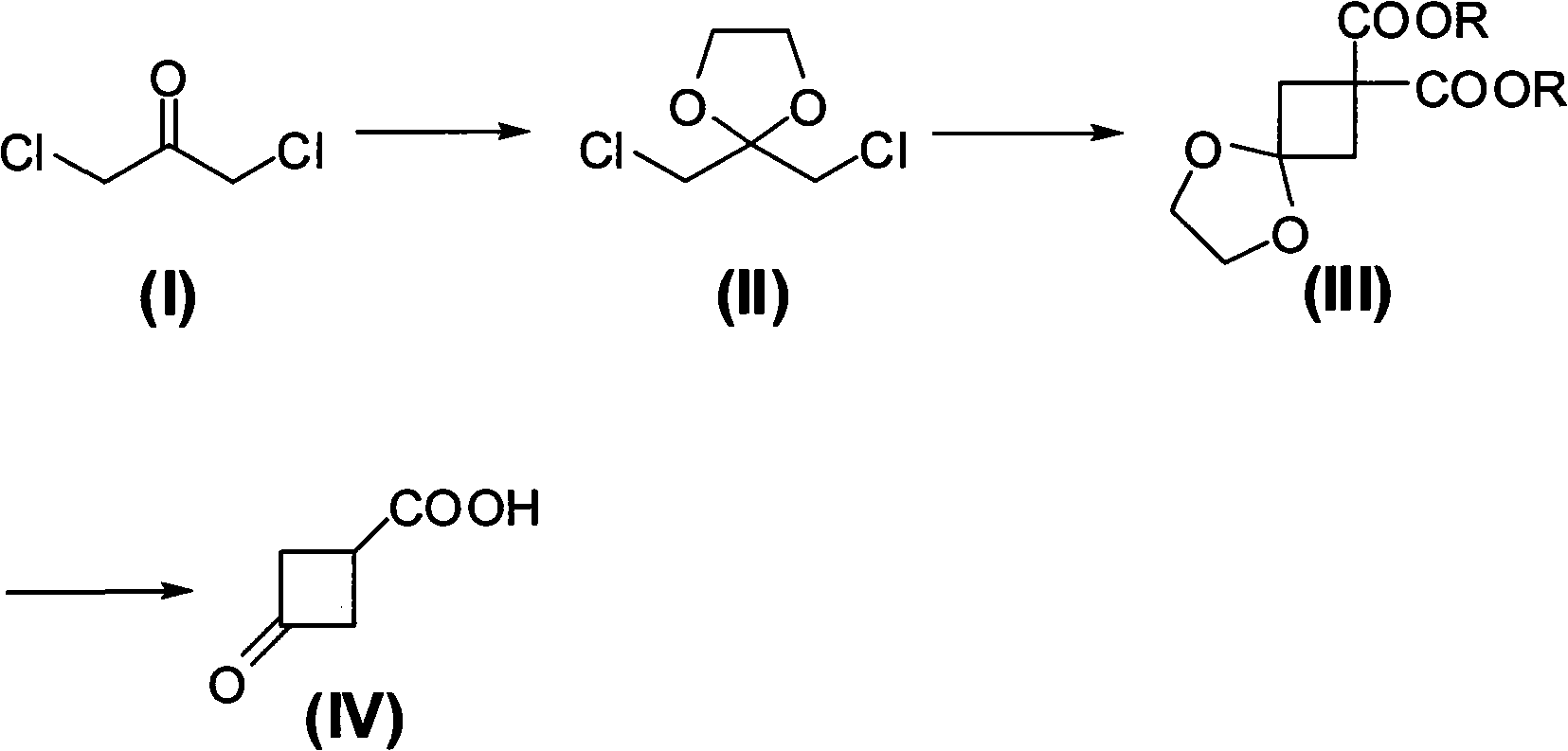 The agricultural chemistry industry has also benefited from the application of this molecule. The new herbicide modified with it as the core structure achieved a control effect of 98% on broadleaf weeds in field trials, while the safety assessment for crops showed that the damage rate was less than 2%. Its unique degradation mechanism makes its half-life in the soil approximately 25 days, which is much shorter than the 90-day residue period of some traditional agents. This reduces the probability of its risk to the environmental ecology by about 70%. A leading agrochemical company has reduced the production cost of key intermediates per kilogram from 5,000 yuan to 3,000 yuan by optimizing its synthesis process, enhancing the price competitiveness of its final products in the market by 12% and increasing annual sales by more than 20%.
In the field of spices and essences, 3-oxocyclobutane carboxylate derivatives are highly favored for their unique woody and amber scents. Its aroma threshold is extremely low, usually only 0.1 nanograms per cubic meter of air, which can be perceived by the human olfactory system. By taking advantage of the stability of its molecular structure, perfumers can design scents that last for up to 8 hours. The intensity of its aroma only decays by 15% after 2 hours, while the decay rate of traditional spices may be as high as 40%. Market analysis indicates that the gross profit margin of high-end perfume products containing such synthetic fragrances can reach 300% to 500% of the cost. This encourages enterprises to continuously invest in the research and development of related derivatives and the optimization of the green synthesis path of 3-oxocyclobutanecarboxylic acid. To achieve higher economic benefits and market penetration.
The agricultural chemistry industry has also benefited from the application of this molecule. The new herbicide modified with it as the core structure achieved a control effect of 98% on broadleaf weeds in field trials, while the safety assessment for crops showed that the damage rate was less than 2%. Its unique degradation mechanism makes its half-life in the soil approximately 25 days, which is much shorter than the 90-day residue period of some traditional agents. This reduces the probability of its risk to the environmental ecology by about 70%. A leading agrochemical company has reduced the production cost of key intermediates per kilogram from 5,000 yuan to 3,000 yuan by optimizing its synthesis process, enhancing the price competitiveness of its final products in the market by 12% and increasing annual sales by more than 20%.
In the field of spices and essences, 3-oxocyclobutane carboxylate derivatives are highly favored for their unique woody and amber scents. Its aroma threshold is extremely low, usually only 0.1 nanograms per cubic meter of air, which can be perceived by the human olfactory system. By taking advantage of the stability of its molecular structure, perfumers can design scents that last for up to 8 hours. The intensity of its aroma only decays by 15% after 2 hours, while the decay rate of traditional spices may be as high as 40%. Market analysis indicates that the gross profit margin of high-end perfume products containing such synthetic fragrances can reach 300% to 500% of the cost. This encourages enterprises to continuously invest in the research and development of related derivatives and the optimization of the green synthesis path of 3-oxocyclobutanecarboxylic acid. To achieve higher economic benefits and market penetration.
The agricultural chemistry industry has also benefited from the application of this molecule. The new herbicide modified with it as the core structure achieved a control effect of 98% on broadleaf weeds in field trials, while the safety assessment for crops showed that the damage rate was less than 2%. Its unique degradation mechanism makes its half-life in the soil approximately 25 days, which is much shorter than the 90-day residue period of some traditional agents. This reduces the probability of its risk to the environmental ecology by about 70%. A leading agrochemical company has reduced the production cost of key intermediates per kilogram from 5,000 yuan to 3,000 yuan by optimizing its synthesis process, enhancing the price competitiveness of its final products in the market by 12% and increasing annual sales by more than 20%.
In the field of spices and essences, 3-oxocyclobutane carboxylate derivatives are highly favored for their unique woody and amber scents. Its aroma threshold is extremely low, usually only 0.1 nanograms per cubic meter of air, which can be perceived by the human olfactory system. By taking advantage of the stability of its molecular structure, perfumers can design scents that last for up to 8 hours. The intensity of its aroma only decays by 15% after 2 hours, while the decay rate of traditional spices may be as high as 40%. Market analysis indicates that the gross profit margin of high-end perfume products containing such synthetic fragrances can reach 300% to 500% of the cost. This encourages enterprises to continuously invest in the research and development of related derivatives and the optimization of the green synthesis path of 3-oxocyclobutanecarboxylic acid. To achieve higher economic benefits and market penetration.
Take the next step
Book a Founder Strategy Call